Quiet Margin:
Edge Balance
Okay, so balance? It's kinda weird - turns out it doesn't start in the
middle like you'd think.
The center is unstable.
It pulls everything inward — slowly, quietly, inevitably.
You cannot touch it.
You cannot stop it.
Your only influence lives in the margins — a narrow border where every
placement matters. From there, you shape balance without ever entering
chaos.
Concept
It's weird - you're controlling things, but not really controlling
them at all. Quiet Margin: Edge Balance is a minimal physics puzzle
built around restraint. The center of the screen behaves like a
gravitational anomaly, drawing shapes inward over time.
You cannot interact with the unstable core.
You can only act from the edges.
That's literally the whole game right there. You've got to watch how
things move, figure out when stuff's gonna fall apart, and try to
keep everything balanced without doing too much.
Stability is never forced. It’s earned.

Core Mechanics
A system that moves even when you don’t.
Shapes drift slowly toward the unstable center
You can only place objects within the outer margin
Every level provides a limited number of placements
Everything you do changes how the whole thing behaves
You don’t push objects directly. You influence trajectories from the
border. Each placement changes how the system breathes, shifts, and
settles.
Sometimes the smartest thing you can do is just... nothing.
Progression
It starts pretty easy with just one thing floating around, but gets
tricky fast.
Early levels introduce single-object motion and wide margins. You
learn how gravity behaves and how subtle placements shift
trajectories.
As complexity increases, multiple shapes interact, collide, and
influence each other. Margins narrow. Pull intensifies. Stability
becomes delicate.
Later stages demand prediction rather than reaction. One misplaced
object can undo an entire structure.
Some puzzles resolve in seconds. Others linger in your thoughts long
after.

Modes
Different ways to approach balance.
-
Level Mode
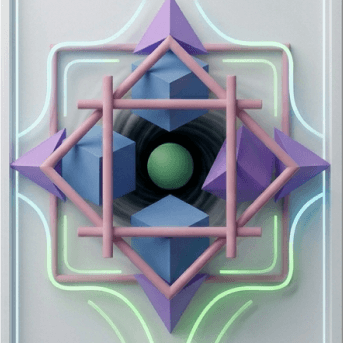
Carefully designed puzzles with escalating complexity and refined challenges.
-
Endless Margin
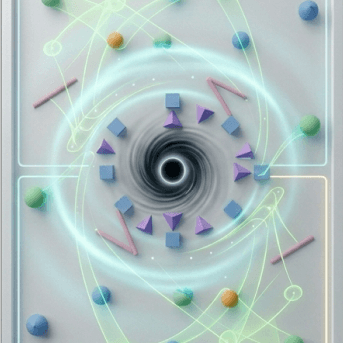
Continuous drift. Survive as long as possible before collapse.
-
Precision Challenge
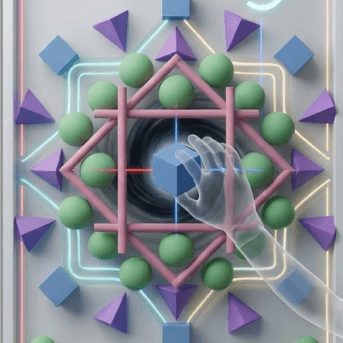
Achieve target stability scores using the minimum number of placements.


All the game modes keep things calm - none of them are trying to stress you out with crazy action.
FAQ
-
No. It's not about being fast - more like that feeling when you're trying to balance something delicate. Objects drift gradually, giving you time to observe their movement patterns. Quick reactions are less important than thoughtful placement. The challenge grows from precision, not pressure.
-
The unstable center is intentionally unreachable. It represents the force you are trying to manage without directly confronting it. By limiting interaction to the margins, the game emphasizes prediction and restraint. This constraint is what creates its unique tension.
-
When shapes are pulled into the center, the system destabilizes and the level ends. There are no harsh penalties — you can instantly restart and try again. Failure is part of learning the system’s rhythm. Each attempt reveals something new about balance.
-
Scores are based on symmetry, efficiency, and stability duration. Using fewer placements generally results in higher rewards. Smooth and elegant solutions are valued over chaotic ones. The system encourages minimalism rather than excess.
-
Yes. Endless Margin mode allows continuous drift without predefined objectives. The goal is simply to maintain balance for as long as possible. Over time, the pull intensifies and systems become harder to stabilize. It’s a quiet test of focus.
-
Absolutely. Most levels can be completed in a few minutes. The minimal interface and instant restarts make it easy to jump in and out. However, some puzzles may stay with you longer than expected. It looks simple enough, but there's actually a lot more to it than you'd expect.